Best Stability Running Shoes 2024: Brooks Adrenaline GTS 25
RunRepeat's comprehensive testing crowns the Brooks Adrenaline GTS 25 as the best overall stability shoe, with six other models leading in specific
RunRepeat has named the Brooks Adrenaline GTS 25 the top stability running shoe overall for 2024. The testing, which evaluated over 100 models, also identified category leaders from Mizuno, Hoka, Nike, Asics, Saucony, and Puma for value, tempo runs, supertraining, long runs, multiuse, and daily training.
Today's stability shoes are lighter, softer, and more comfortable than earlier versions while still providing essential support for overpronation and form maintenance. The evolution from rigid, clunky designs has resulted in models that offer biomechanical support without sacrificing ride quality, making them suitable for a broader range of runners.
Category Winners
RunRepeat's testing identified top performers across seven specific use cases. The full list of category leaders is as follows:
| Category | Model |
|---|---|
| Best Overall | Brooks Adrenaline GTS 25 |
| Best Value | Mizuno Wave Inspire 22 |
| Best for Hard Tempos | Hoka Arahi 8 |
| Best Supertrainer | Nike Structure Plus |
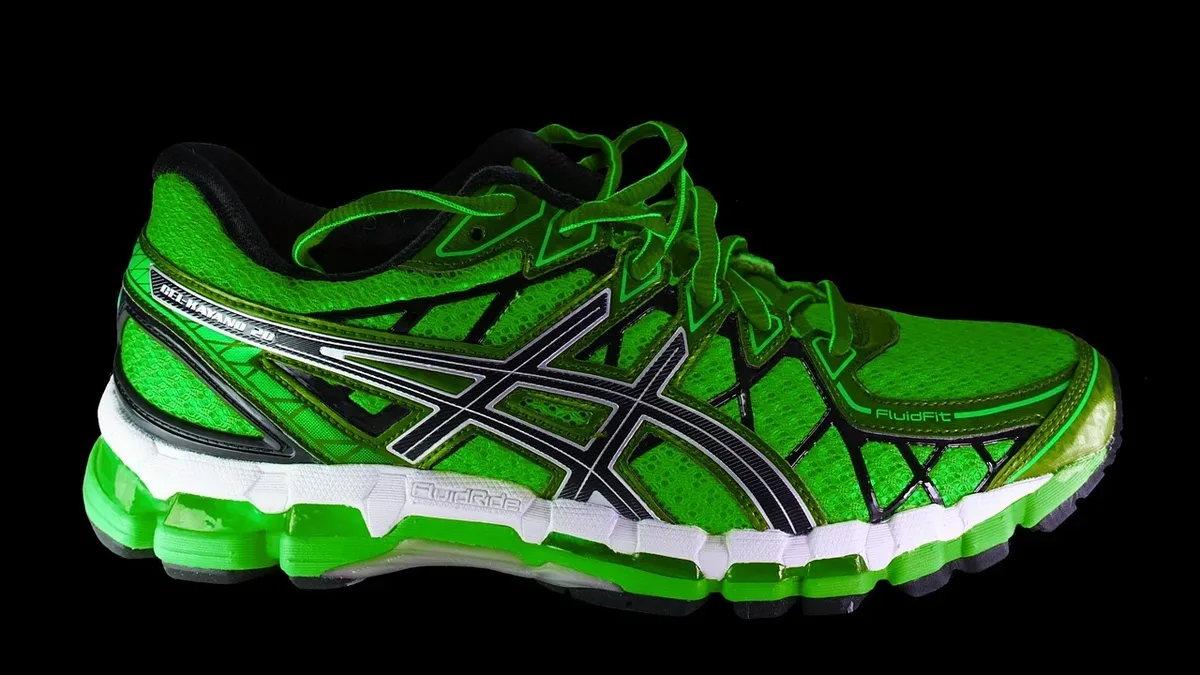
| Best for Long Runs | Asics Gel-Kayano 33 |
| Best Multiuse Trainer | Saucony Guide 19 |
| Best Daily Trainer | Puma ForeverRun Nitro 2 |
Brooks Adrenaline GTS 25 Details
The Brooks Adrenaline GTS 25 features updated stack heights and a reduced offset. It uses DNA Loft v3 foam and has reactive guide rails on the medial and lateral edges, which are designed to be supportive without being overly prescriptive. The upper is a breathable engineered mesh with a stretch knit heel collar.
Specific measurements for the Brooks Adrenaline GTS 25 highlight its design. The shoe has a forefoot stack height of 37 mm and a heel stack height of 27 mm, resulting in a 10 mm heel-to-toe offset. This is down from 12 mm in previous versions. The shoe weighs 10.6 ounces. Lab tests showed the platform dimensions are 117.7 mm in the heel and 100.7 mm in the forefoot, with stack heights measured at 36.1 mm and 25.9 mm respectively. A bend test revealed it is 7% more flexible than average. Tester Courtney Kazmierczak noted the heel collar is a hair too high in the back.
Mizuno, Hoka, and Nike Model Highlights
The Mizuno Wave Inspire 22, named Best Value, was noted by testers for its durability and lighter weight. It includes an extra eyelet for a secure heel lock to prevent slippage.
Hoka's Arahi 8, the Best for Hard Tempos, uses a softer compression-molded EVA foam that avoids becoming mushy. Its key feature is an H-Frame system, a dense, H-shaped foam piece in the midsole that replaces the J-Frame from the previous model. The shoe is described as lightweight and smooth-riding. Tester Amanda Furrer developed a fondness for it, saying, "I have a soft spot for this shoe, it’s just so good on long runs."
The Nike Structure Plus, the Best Supertrainer, combines ReactX and ZoomX foams with a dual-zone rubber outsole. It is described as orthotic-friendly, with a collar and lacing system that accommodates insoles. Testers found it very comfortable for walking and versatile with dressier outfits, though some noted it feels a bit heavy, less responsive, and runs slightly small front to back.
Asics, Saucony, and Puma Model Insights
Asics' Gel-Kayano 33, selected as Best for Long Runs, uses updated FluidSupport technology which is more malleable than before. The model features softened foam and an updated fit, while retaining a breathable upper, forward-moving geometry, and a grippy sole for wet pavement.
The Saucony Guide 19, the Best Multiuse Trainer, uses Pwrrun foam for a cushioned ride that isn't overly soft. It incorporates a medial TPU guidance frame for mild overpronation correction, with an 8mm drop and a 32mm stack height in the heel. Wear-tester Dave Block was highly impressed, stating he "can’t remember a shoe that’s felt this great."
Puma's ForeverRun Nitro 2, the Best Daily Trainer, uses a nitrogen-infused foam midsole with a softer inner core and a firmer outer rim frame for support. It includes a heel clip and strategic overlays. The shoe maintains a springy ride but one tester reported that feet got very hot and sweaty after three to four miles, calling it a tough wear in summer.
Testing Methodology and Context
RunRepeat's rankings are based on unbiased lab and real-world testing. The company purchased all shoes with its own money to prevent bias. Over 30 different parameters were measured in the lab, including foam softness using an Asker C durometer, heel counter stiffness on a 1-5 scale, and torsional rigidity and longitudinal stiffness via specialized machines.
The testing also highlighted other notable models. The adidas Supernova Solution 3, featuring a Guide Your Ride system and LIGHTTRAXION outsole, was rated highly. It scored 4 out of 5 for torsional rigidity, and its traction test score of 0.77 was 48% grippier than average. It required 15.2N of force to reach 30 degrees in a bend test. The Saucony Hurricane 26 was measured with a heel thickness of 38.3 mm and base dimensions of 129.8 mm in the heel and 112.3 mm in the forefoot.
For racing, the Hoka Rocket X 3 features a winged carbon plate for propulsion and a dual-density PEBA midsole for high energy return. It has a sticky rubber outsole for traction in wet conditions. Overpronator tester Shane Houghton said the shoe felt stable, low to the ground, and prevented ankle-rolling anxiety. Cat Bowen, another tester, cautioned that some stability designs can be too aggressive, noting, Some stability shoes can be so aggressive that the rails can begin to pinch the lateral sides of the foot during long runs.
RunRepeat evaluated over 100 stability running shoes on the market.